AWS Durometer Test Stands

F.A.Q.
Hydraulic & Pneumatic Speed-Dampened Stands (ASTM D2240 3.2 mm/s Descent Control)
To overcome internal spring resistance and seat the Durometer presser foot flat against the test specimen without excessive crushing force, ASTM D2240 mandates three specific dead-weight masses:
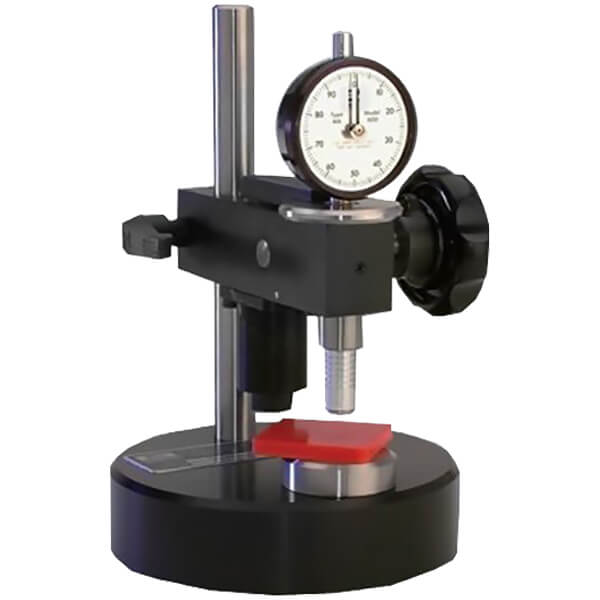
- 400 grams: Required for low-force foam and gel scales (Shore OO, OOO, and OOO-S) using the Rex OS-4 Test Stand.
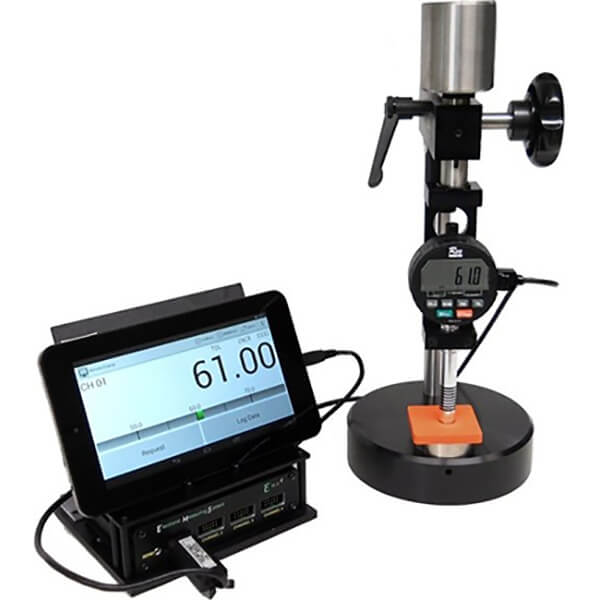
- 1.0 kilogram (1,000 g): Required for medium-force elastomer scales (Shore A, B, E, and O)—supplied as the standard base mass on most test stands.
- 5.0 kilograms (5,000 g): Required for high-force rigid polymer scales (Shore C, D, and DO)—achieved by adding an optional 4 kg auxiliary weight on top of a 1 kg stand arbor.
Why does descent speed affect Shore hardness readings on rubber and plastics?
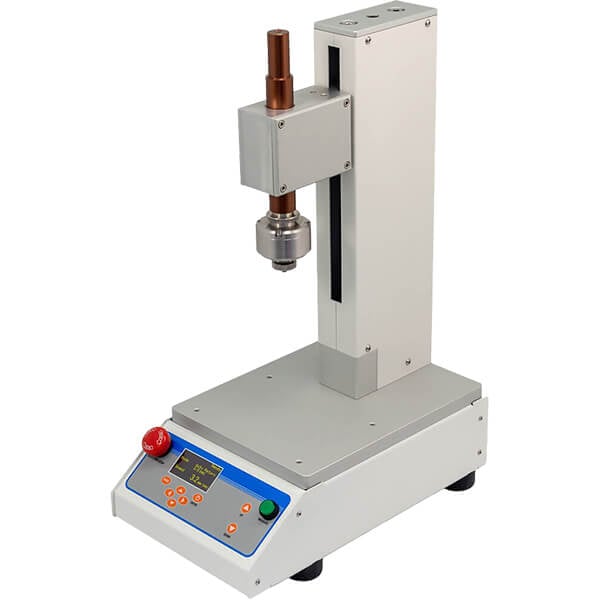
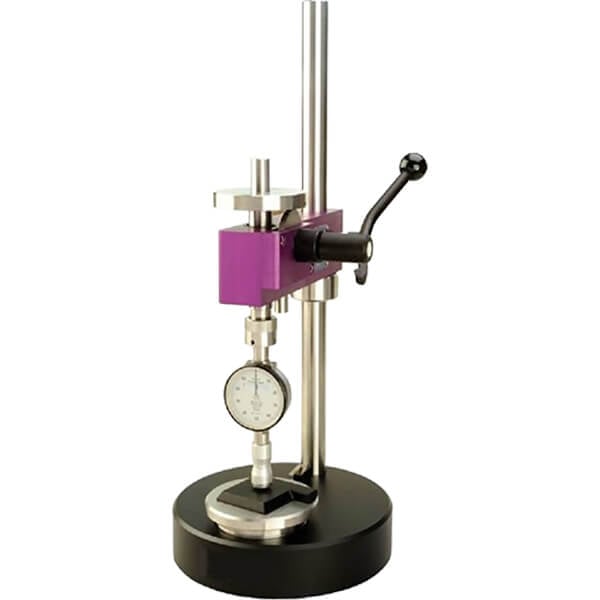
If a Durometer is dropped too quickly onto an elastomer specimen, kinetic impact energy drives the indenter deeper into the surface than static spring force alone, causing artificially low hardness readings (or high transient spikes). Dampened stands like the Rex OS-2H and motorized stands like the Imada YMS regulate descent velocity below the ASTM D2240 limit of 3.2 mm/s for shock-free contact.