$832.00
    warranty 1 year
    Product Description

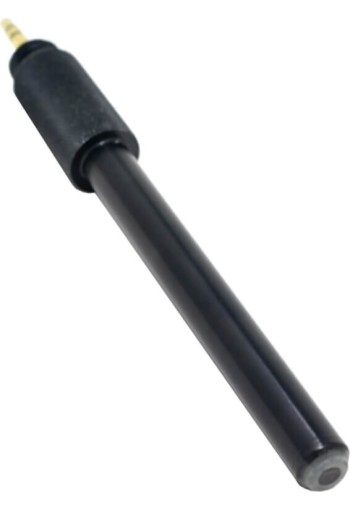
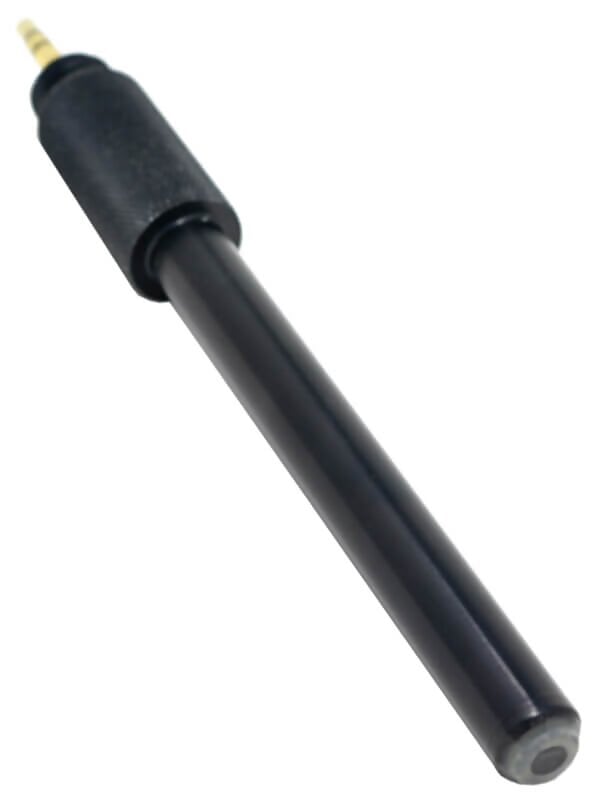
    The NKE Sensor AMM Aquaread Ammonium /Ammonia Water Electrode is an Ion Selective Electrode (ISE). It measures charged ammonium ions found in the water. By using a complex calculation the sensor is also able to measure the ammonia concentration in the water.

    What is Ammonium / Ammonia
    • Ammonium (NH4+) is a positively charged ion (or cation) that is formed by the addition of a hydrogen proton to ammonia (NH3). Ammonia is found naturally in water, but if it is found at higher than natural levels this is a sign of contamination. This is why it’s so important to test for ammonia in water.
    Ammonia vs Ammonium
    • Both compounds contain nitrogen and hydrogen. Ammonia contains three hydrogen and one nitrogen while ammonium contains four hydrogen and one nitrogen. As a result, ammonia smells pungent and ammonium has no smell.
    Why test for Ammonia in water?
    • Ammonia levels higher than around 0.1 mg/L usually indicate polluted waters. Ammonia is used in fertiliser and animal feed production as well as in the manufacture of plastics, paper, rubber, etc. Ammonium ions are a waste product of animals and, in the case of fish, are directly excreted into the water.
    Solid State Sensor
    • This is a solid state sensor in that it is not gel-filled. The advantage of this kind of sensor over those offered by other manufacturers is that the sensor will not deteriorate over time so long as it's dry. Gel-filled sensors have a finite life from the point of manufacture.
    • A new, dry solid state sensor can be stored for years without degradation, making this a superb ammonia measuring instrument.
    Calibration and Temperature
    • Successful calibration of an ISE is fairly complex. On its initial use, a three-point calibration is required. Generally, this is at 10ppm and 100ppm of the sensor’s specific calibration solution, with the third point intended to characterise the effect of temperature on that specific sensor. The third point is a second calibration at 10ppm however, this calibration point must be at least 10 degrees colder than the initial point. This is because the measured concentration varies with temperature as well as the actual concentration of the ion.
    • The good news is that once this calibration is complete, subsequent calibrations do not require the third point to be re-done making future calibrations much simpler to perform.
    Limitations
    • An ideal ISE sensor would only allow the ion in question to be passed through the membrane. However, in practise all ion selective electrodes suffer from interference from ions which are similar in nature to the target ion. For this reason, ISE Electrodes are not recommended for use in brackish or salt water due to the high level of interfering ions.
    Simple installation
    • Installing the ammonium sensor into an Aquaprobe is a very simple process. Simply unscrew the blanking plug from an appropriate aux socket, apply some silicon grease to the thread of the sensor (grease provided) and screw in the sensor. After installation full calibration is required.

    Features
    • Solid state ISE sensor
    • Ammonium Measurement range 0 – 9,000mg/l
    • Ammonium Resolution: two auto range scales: 0.00 – 99.9mg/l, 100.0 – 9,000mg/l
    • Ammonium Accuracy: +/- 10% of reading
    • Ammonia Measurement range 0 – 9,000mg/l
    • Ammonia Resolution: two auto range scales: 0.00 – 99.9mg/l, 100.0 – 9,000mg/l
    • Ammonia Accuracy: +/- 10% of reading
    • Simple to install on a wide range of Aquaprobes
    • Sensor life of around 6 months depending on usage
    • Long storage shelf life
    Related Product

    NKE Aquaprobe-2000 Water Monitoring Probe


    The NKE Aquaprobe-2000 Water Monitoring Probe is the smaller of our advanced portable multiparameter water monitoring probes. It comes with a range of standard sensors included, it also offers some customisation options that allow you to add even more sensors to the probe. All of our probes are constructed from tough marine grade aluminium that has been hard anodised, making it suitable for use in both fresh and salt waters

    Click image for more info

    NKE Aquaprobe-5000 Water Monitoring Probe


    The NKE Aquaprobe-5000 Water Monitoring Probe is the larger of our advanced portable multiparameter water monitoring probes. It comes with a range of standard sensors included, and much like its smaller counterpart it offers more customisation options that allow you to add extra sensors to the probe. All of our probes are constructed from tough marine grade aluminium that has been hard anodised, making it suitable for use in both fresh and salt waters.

    Click image for more info

    NKE Aquaprobe-6000 Water Monitoring Probe


    The NKE Aquaprobe AP-6000 Water Monitoring Probe is our smallest self-cleaning Aquaprobe to date. It can be used for comprehensive spot monitoring as part of a package, or it can be used in permanent deployments thanks to its new, much smaller self-cleaning mechanism. It features a diameter of only 58mm (the same size as the AP-5000).

    Click image for more info

    NKE Aquaprobe-7000 Water Monitoring Probe


    The NKE Aquaprobe-7000 Water Monitoring Probe is designed for long term deployment utilising a central cleaning system to keep the fitted sensors clean reducing the effects of bio-fouling common in extended deployments. The probe comes with all of our standard parameters including optical dissolved oxygen, it also features 6 user configurable auxiliary sockets allowing you to add multiple specialist sensors to the probe. The NKE Aquaprobe-7000 Water Monitoring Probe is capable of measuring up to 17 individual parameters at once.

    Click image for more info
    Downloads

    F.A.Q.


    About Ammonium testing

    Ammonia is toxic to fish and other aquatic organisms, even in very low concentrations. The higher the pH and the warmer the water, the more toxic the ammonia. The levels of ammonium /ammonia in environmental waters could be affected by: agricultural runoff, sewage effluent, landfill leachate and industrial effluent.

    In addition to the actual ammonia in the water being toxic to aquatic life, it can also cause eutrophication in a water body – promoting the growth of choking aquatic vegetation or algal blooms that disrupt the normal functioning of the ecosystem.Algal blooms can reduce the amount of oxygen in the water needed for fish and other aquatic life to survive. This is why an ammonia water test is vital for these ecosystems.

    How to measure Ammonia in water using our sensor

    To use Aquaread’s ammonium / ammonia sensor, first install it into your probe of choice, then perform a full calibration using dilutions from the stock calibration solution. Once calibrated it’s good to go. Simply put the probe into the body of water, allow the reading to stabilise and take your measurement.

    When to use the Ammonium sensor

    The concentration of ammonia and ammonium levels in water is a commonly measured parameter in environmental water, potable water, and waste water.

    There are many reasons why you might need to test for ammonium/ammonia in water. One such application is in wastewater treatment plants, monitoring the amount of ammonium/ammonia that’s discharged into rivers or used as drinking water.

    Ammonia is colourless and odourless in small amounts, so the only way to detect it is through ammonia testing. This is particularly vital in fisheries as, although fish naturally excrete ammonia, too much can harm fish. Early detection allows for the elimination of ammonia before the concentration reaches toxic levels.

    ADD TO CART THE ITEMS YOU WOULD LIKE TO PURCHASE
    MODELS
    Copyright © 2026 Abq Industrial